Last Updated: March 30, 2026
What a modern data warehouse means is a cloud-based system that stores, processes, and analyzes large amounts of data from multiple sources in real time. Unlike older systems that struggled with different data types and slow performance, today’s warehouses can handle everything from structured databases to unstructured social media feeds. A modern data warehouse combines data management and processing systems like data lakes, big data processing engines, and machine learning platforms to deliver insights faster than ever before.
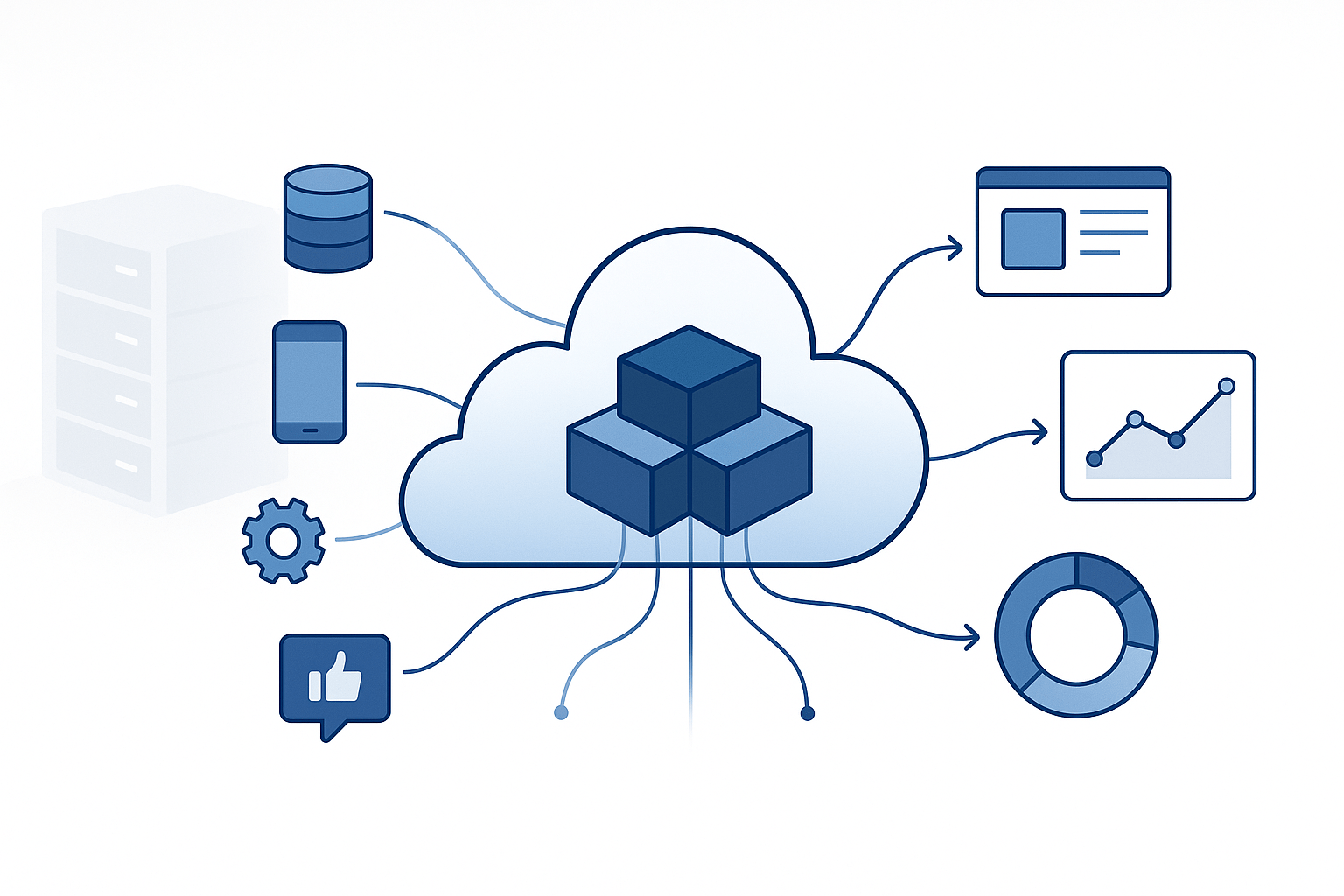
You need a modern approach if your business relies on making quick decisions based on current information. Traditional warehouses required you to plan storage carefully and often couldn’t scale when your data grew. Modern data platforms are business-driven, scalable, and include governance and quality controls from the start.
The key features of modern data warehouses include separating storage from computing power, which lets you adjust resources based on your needs without rebuilding everything. This flexibility means you only pay for what you use while maintaining fast query performance. Whether you’re a small startup or a large enterprise, understanding how these systems work helps you make smarter choices about managing your company’s data.
Key Takeaways
- Modern data warehouses store and analyze multiple data types in the cloud with better speed and flexibility than traditional systems
- You can scale storage and computing resources independently to control costs while maintaining high performance
- Advanced features like real-time analytics and machine learning integration help you make faster business decisions
What Is a Modern Data Warehouse?
A modern data warehouse serves as a platform to store, process, and analyze information from multiple sources in one central location. Unlike older systems, it can handle structured data like spreadsheets, semi-structured data like JSON files, and unstructured data like images or videos.
These systems typically run in the cloud rather than on physical servers in your office. This means you can scale up or down based on your needs without buying expensive hardware.
Key Features
Modern data warehouses offer several important capabilities:
- Separated compute and storage allows you to adjust processing power independently from storage capacity
- Real-time data processing gives you up to date insights instead of waiting for overnight updates
- Automated scaling handles traffic spikes without manual intervention
- Built-in security protects sensitive information with encryption and access controls
Benefits You Can Expect
You gain flexibility to work with any data type or format. The cloud-based design reduces costs since you only pay for what you use. Your team can access data faster with improved query performance.
Integration with machine learning and AI tools becomes easier. You can connect services like Google BigQuery and Amazon Redshift to build advanced analytics.
| Modern Data Warehouse | Traditional Data Warehouse |
|---|---|
| Cloud based infrastructure | On premises servers |
| Handles all data types | Limited to structured data |
| Scales automatically | Requires manual upgrades |
| Pay per use pricing | Fixed hardware costs |
| Real-time processing | Batch processing only |
Core Principles of a Modern Data Warehouse
A modern data warehouse transforms how you handle data by combining advanced technology with practical design principles. These systems prioritize real time analytics, self service access, and seamless integration across multiple data sources while maintaining strong security and governance.
Modern vs. Traditional Data Warehouse
Traditional data warehouses were built for a different era. They typically run on expensive hardware in your own data center and require significant upfront investment. You need to predict your storage needs years in advance, which often leads to either wasted resources or capacity problems.
Modern data warehouse architecture takes a different approach. These systems separate storage from computing power, letting you scale each independently. You can store massive amounts of data cheaply while only paying for processing power when you actually need it.
The old model required you to structure all your data before loading it. Modern systems let you store raw data first and figure out the structure later. This means you can start working with new data sources much faster.
Traditional warehouses struggle with unstructured data like social media posts, images, or sensor readings. Modern platforms handle structured, semi structured, and unstructured data without breaking a sweat.
Key Characteristics and Benefits
Your modern data warehouse should support both batch processing and streaming data ingestion. This means you can analyze data as it arrives instead of waiting hours or days for batch updates to complete.
Built in governance features include role based access control, encryption, and detailed auditing. These security and governance capabilities protect sensitive information while meeting regulatory requirements.
Self service analytics is another crucial feature. Business users can access and analyze data without constantly requesting help from IT teams. This speeds up decision making and reduces bottlenecks.
Cost optimization happens automatically in many modern systems. You pay only for what you use rather than maintaining expensive infrastructure that sits idle most of the time. Storage costs have dropped dramatically compared to traditional systems.
The ability to handle diverse data types gives you more complete insights. You can combine customer transactions with social media sentiment, IoT sensor data, and external market information in a single platform.
Scalability and Flexibility
Scalability in cloud first environments lets you grow your data infrastructure as your business expands. You can add storage or processing power in minutes instead of waiting months for hardware procurement and installation.
Flexibility means adapting to changing business needs quickly. You can experiment with new data sources, add analytical workloads, or spin up development environments without major investments or long planning cycles.
Modern platforms scale both vertically and horizontally. Vertical scaling adds more power to existing resources, while horizontal scaling adds more machines to distribute the workload. This gives you multiple options for handling growth.
You also get flexibility in how you query data. Some workloads need fast responses for dashboards, while others can run overnight for complex analysis. Modern systems optimize for both scenarios automatically.
Integration with Cloud and Hybrid Environments
Cloud environments provide the foundation for most modern data warehouse implementations. Major platforms like AWS, Azure, and Google Cloud offer managed services that handle maintenance, updates, and infrastructure management for you.
Hybrid models combine on premises systems with cloud resources. You might keep sensitive data in your own data center while using cloud computing for heavy analytical workloads. This approach balances security requirements with cloud benefits.
Your data warehouse modernization journey might start with a hybrid approach before moving fully to the cloud. This reduces risk and lets you migrate gradually while maintaining existing operations.
Integration capabilities connect your warehouse to countless data sources. APIs, connectors, and data pipelines move information from business applications, databases, files, and external services into your analytical environment. The best systems make these connections simple to set up and maintain.
Modern Data Warehouse Architecture
A modern data warehouse architecture consists of multiple layers that work together to move data from source systems through processing stages to end users. The architecture includes ingestion pipelines that bring data into the system, storage solutions that hold both raw and processed data, and serving layers that deliver insights to business users.
Architecture Layers and Components
Your data warehouse architecture typically operates through three main layers. The first is the data ingestion layer, where data flows in from various sources like databases, applications, and external systems. This layer handles both batch processing for large scheduled data loads and streaming data for real-time updates.
The storage and processing layer sits in the middle. This is where your raw data lands initially and then gets transformed into useful formats. Many organizations use a data lake to store raw data in its original form alongside a structured data warehouse for processed information.
The serving layer delivers data to your end users through reports, dashboards, and analytics tools. This layer often includes specialized data marts that focus on specific business areas like sales or marketing. An operational data store may also exist here to support near real-time operational reporting needs.
Modern architectures support parallel processing through technologies like MPP (massively parallel processing) systems. These let you run queries across multiple nodes at once, making analysis much faster. Cloud platforms have made it easier to scale these components up or down based on your needs.
Data Ingestion and Data Engineering
Data pipelines move information from source systems into your warehouse using either ETL (extract, transform, load) or ELT (extract, load, transform) approaches. ETL transforms data before loading it into the warehouse, while ELT loads raw data first and transforms it later using the warehouse’s processing power.
Change data capture (CDC) tracks modifications in source systems and only moves the changed records. This makes your pipelines more efficient than reloading entire datasets every time. You can set up CDC to capture inserts, updates, and deletes as they happen.
Data integration tools connect to various sources and automate the movement of data. Modern tools handle both structured data from databases and unstructured data from files, APIs, and streaming sources. Your data engineering team builds and maintains these pipelines to ensure reliable data flow.
Data streaming brings real-time data into your warehouse as events happen. This differs from traditional batch loads that run on schedules like once per day or hour. Streaming lets you analyze fresh data for time sensitive decisions.
Storage Strategies: Data Warehouses, Data Lakes, and Lakehouses
A traditional data warehouse stores structured data in tables optimized for queries and analysis. You organize this data following patterns like the data warehouse pyramid, which shows how data flows from detailed transaction records up to summarized reports.
Data lakes store all types of data in their raw format without requiring a predefined structure. Technologies like Hadoop made data lakes popular by providing cheap storage for massive amounts of information. You keep everything from CSV files to JSON documents to video files in a data lake.
The data lakehouse combines features from both approaches. Lakehouses let you store raw data like a lake while also supporting the structure and query performance of a warehouse. This hybrid architecture reduces complexity because you maintain fewer separate systems.
Your storage strategy depends on your specific needs. Structured business data works well in a warehouse, while experimental or exploratory data fits better in a lake. Many organizations now use a lakehouse to get benefits from both worlds without managing multiple platforms.
Data Management, Governance, and Security
Modern data warehouses require structured approaches to maintain data quality, enforce governance policies, and protect sensitive information. These three pillars work together to ensure your data remains accurate, accessible, and secure while meeting regulatory requirements.
Data Quality and Metadata Management
Data quality determines how useful your warehouse actually is. Poor quality data leads to wrong decisions and wasted resources.
You need to establish validation rules that check data as it enters your warehouse. These rules catch errors like missing values, incorrect formats, and duplicate records. Regular data profiling helps you spot quality issues before they spread through your systems.
Metadata management tracks information about your data. This includes where data comes from, what it means, and how it changes over time. Data lineage shows the complete path data takes from source systems through transformations to final reports.
Good metadata management helps you:
- Find the data you need faster
- Understand what each field means
- Track changes and troubleshoot problems
- Meet compliance requirements
Your metadata should document business definitions, technical specifications, and relationships between data elements. This creates a searchable catalog that makes your warehouse easier to use.
Data Governance Frameworks
A data governance framework establishes rules and processes for managing data across your organization. It defines who can access what data and how they can use it.
Your framework needs clear policies for data ownership, stewardship, and accountability. Each dataset should have an assigned owner responsible for quality and access decisions. Data stewards enforce policies and help users understand governance requirements.
Modern data governance focuses on building trust and efficiency rather than creating bureaucracy. You should automate governance tasks where possible and integrate them into your daily workflows.
Key framework components include:
- Data classification standards for sensitivity levels
- Retention policies for how long to keep data
- Quality metrics and monitoring processes
- Change management procedures
Security, Compliance, and Access Controls
Security protects your data from unauthorized access and breaches. Role-based access control gives users only the permissions they need for their jobs. This limits exposure if credentials get compromised.
Encryption scrambles data so unauthorized users cannot read it. Encryption at rest protects stored data while encryption in transit secures data moving between systems. You should encrypt sensitive fields like personal information and financial records.
Regulatory compliance requires following laws like GDPR for European data and HIPAA for healthcare information. These regulations mandate specific security controls, audit trails, and data handling procedures.
Built-in governance and security features in modern platforms provide auditing capabilities that track who accessed what data and when. This audit trail helps you prove compliance during reviews and investigations. You need to regularly review access logs and update security policies as threats evolve.
Advanced Analytics and Business Intelligence
Modern data warehouses serve as the foundation for sophisticated data analytics and business intelligence operations. They enable organizations to run machine learning workloads, generate detailed reports, and use advanced analytics tools to transform raw data into actionable insights.
Enabling Machine Learning and AI
A modern data warehouse provides the computational power and data infrastructure needed to support machine learning and AI initiatives. You can train models directly within platforms like Amazon Redshift and Google BigQuery without moving data to separate systems.
These platforms handle large scale machine learning workloads efficiently. You get access to built-in algorithms for predictive analytics that help forecast sales, identify customer churn, and detect anomalies in your data.
The integration between your warehouse and AI tools eliminates data silos. Modern data warehouses enable organizations to accelerate real-time analytics and enhance security while driving smarter decision making. You can deploy models faster and iterate on them more quickly than with traditional systems.
Business Intelligence and Reporting
Your data warehouse connects directly to BI tools that transform stored data into meaningful reports and dashboards. Popular platforms like Tableau and Power BI pull information from your warehouse to create visual reports that stakeholders across your organization can understand.
Data warehouses play a central role in business intelligence by organizing data for reporting activities. You can generate standard reports on a schedule or create custom analyses when needed.
The structured nature of warehouse data makes reporting more reliable. You get consistent metrics across different departments because everyone pulls from the same trusted source. Your reports load faster and handle more complex queries than systems built on operational databases.
Supporting Data Science and Advanced Analytics
Data scientists use warehouses as their primary workspace for exploratory analysis and model development. You can write queries in Python and R that connect directly to your warehouse, allowing you to analyze billions of rows without downloading data to your local machine.
Modern architectures support advanced analytics use cases ranging from batch reporting to near real time alerting. Your team can perform complex statistical analysis, build predictive models, and test hypotheses at scale.
The warehouse provides a stable environment where data science teams can access historical data alongside current information. You can compare trends over time and validate your models against actual outcomes.
Visualization and Analytics Tools
Modern analytics tools connect seamlessly to your data warehouse to deliver visual analytics capabilities. You can create interactive dashboards that update automatically as new data arrives in your warehouse.
These tools help you spot patterns and outliers through charts, graphs, and heat maps. Your business users can explore data on their own without writing SQL queries or understanding database structures.
The combination of powerful analytics tools and a robust warehouse enables faster data driven decisions. You can drill down from high level summaries to detailed transaction records, filter by multiple dimensions, and share findings with colleagues instantly.
Modern Data Warehouse Use Cases
Modern data warehouses power critical business operations across industries. These cloud-based storage systems help you manage large amounts of structured and unstructured data from multiple sources.
Business Intelligence and Reporting
You can use modern data warehouses to create detailed reports and dashboards. Your team gets access to real-time insights about company performance, sales trends, and customer behavior. Data warehouse architecture makes it easy to analyze information quickly.
Customer Analytics
Modern warehouses help you understand your customers better. You can track purchase history, preferences, and engagement patterns across different channels. This information helps you personalize marketing campaigns and improve customer service.
Financial Planning and Analysis
Your finance team can use warehouses to consolidate data from different departments. You get accurate forecasting, budget tracking, and cost analysis. The historical record of business metrics helps you identify trends over time.
Operations Management
You can monitor supply chains, inventory levels, and production efficiency. Modern data warehouses let you spot problems before they become serious issues. Your operations team gets the information they need to make quick decisions.
Predictive Analytics
Modern warehouses support advanced analytics and machine learning. You can predict future trends, customer churn, and market changes. These use cases for data warehouses help you stay ahead of competitors and plan for growth.
Cloud Data Warehouse Providers
The cloud data warehouse market includes several major platforms that help businesses store and analyze large amounts of data. Each provider offers different features, pricing models, and strengths that match specific business needs.
Leading Cloud Data Warehouse Platforms
Snowflake stands out as one of the top data warehouses in 2025 with its ability to separate storage and compute resources. You can scale each independently, which means you only pay for what you use. The platform works across multiple clouds including AWS, Azure, and Google Cloud.
Google BigQuery gives you a serverless option that removes the need to manage infrastructure. You can run queries on massive datasets without setting up servers. The platform uses Google’s infrastructure and charges based on the data you process.
Amazon Redshift operates within the AWS ecosystem as a petabyte-scale cloud data warehouse. It includes strong encryption options, fault tolerance, and built-in machine learning tools. If you already use AWS services, Redshift integrates smoothly with your existing setup.
Microsoft Azure Synapse Analytics combines data warehousing with big data analytics. You get deep integration with other Microsoft tools like Power BI and Azure Machine Learning.
Databricks focuses on data lakehouse architecture, blending warehouse capabilities with data lake flexibility. This approach works well when you need to handle both structured and unstructured data in one platform.
Cost Optimization and Performance Tuning
Managing costs while maintaining high performance requires a balanced approach that addresses both infrastructure efficiency and query execution. Organizations that implement targeted cost optimization strategies and tuning techniques can reduce expenses by 40 to 60 percent while improving data access speeds.
Cost Optimization Strategies
You can achieve significant savings by monitoring your warehouse resource usage and adjusting compute capacity based on actual demand. Start by identifying idle or underutilized resources that consume budget without delivering value.
Storage costs decrease when you compress data and archive historical records that teams rarely access. Moving cold data to lower cost storage tiers reduces monthly expenses without affecting active analytics workloads.
Query optimization directly impacts your compute costs. When you eliminate redundant queries and schedule resource intensive reports during off peak hours, you reduce the computational power needed. Setting automatic scaling policies ensures you pay only for the resources your workload actually requires.
Consider implementing workload management practices that prioritize critical business queries over less urgent requests. This prevents expensive resource conflicts and keeps your most important analytics running smoothly.
Performance Tuning Best Practices
Indexing your most queried columns accelerates data retrieval by allowing your system to locate records faster. Focus on fields used in WHERE clauses, JOIN operations, and ORDER BY statements for maximum impact.
Partitioning splits large tables into smaller segments based on dates, regions, or other logical divisions. This improves query performance because your system scans only relevant partitions instead of entire tables.
Key tuning techniques include:
- Materializing frequently used aggregations and calculations
- Updating statistics regularly so the query optimizer makes better decisions
- Enabling result caching for repeated queries
- Using columnar storage formats for analytical workloads
You should also review your data warehouse configuration settings to ensure memory allocation, concurrency limits, and timeout values match your workload patterns. Testing queries before deploying them to production helps you catch performance issues early.
ETL vs ELT
Both ETL and ELT are data processing approaches that move information from source systems into your data warehouse, but they handle the transformation step at different stages. The order of operations makes a significant impact on performance, cost, and how you manage your data.
ETL vs ELT: What’s the Difference?
The main difference between these approaches is when the transformation happens. ETL extracts data from sources, transforms it before loading, and then loads the cleaned data into your warehouse. ELT extracts data, loads it directly into your warehouse first, and transforms it after storage.
With ETL, you do the heavy lifting before data reaches your warehouse. You clean, format, and prepare data using separate transformation tools or servers. This means only processed data enters your warehouse.
ELT takes a different path. You load raw data straight into your modern data warehouse and let the warehouse handle transformations. This approach uses the processing power of cloud platforms like Snowflake or BigQuery.
ETL works best when:
- You need to protect sensitive data before storage
- Your warehouse has limited processing power
- You work with older systems
- Data needs heavy cleaning before use
ELT works best when:
- You use cloud data warehouses with strong processing
- You want faster data loading
- You need flexibility in transforming data
- You handle large amounts of data
Your choice between ETL and ELT depends on your warehouse capabilities, data volume, and business needs.
Modern Data Warehouse Best Practices
Building a successful modern data warehouse requires following proven practices that ensure your system performs well and scales with your needs. Implementing DataOps best practices helps create a data warehouse that can handle growing data volumes and complexity.
Design for Growth
You need to plan for scalability from the start. Your data warehouse should handle increased data volumes without major redesigns. Choose cloud platforms that let you add storage and computing power as your business grows.
Maintain Clean Data Models
Schema consistency matters for reliable analytics. When you keep your data structures organized and well documented, your team can trust the data they work with. This means establishing clear naming conventions and data types across all tables.
Start with Strong Governance
Building governance from day one protects your data and ensures compliance. Set up access controls, define data ownership, and create clear policies for who can view or modify different datasets.
Watch Your System
Monitoring and observability tools help you spot problems before they impact your users. Track query performance, data load times, and system health. You can fix issues faster when you see what is happening in real time.
Automate Repetitive Tasks
Using automation and orchestration tools saves time and reduces errors. Automate data pipelines, quality checks, and routine maintenance tasks. Modern data warehouse development relies on automation to keep systems running smoothly while your team focuses on more valuable work.
Future Trends in Modern Data Warehousing
The landscape of data warehousing is changing fast. You’ll see major shifts in how your organization stores, processes, and analyzes data over the next few years.
AI-driven data pipelines are becoming standard tools for managing your data flows. These intelligent systems can automatically detect errors, optimize performance, and even predict when maintenance is needed. You won’t need to manually monitor every step of your data processes anymore.
Real-time streaming and near-zero latency capabilities mean you can analyze information as it arrives. Your business decisions can be based on what’s happening right now instead of waiting for batch updates. This gives you a competitive edge when responding to market changes or customer needs.
The data lakehouse convergence combines the best features of data lakes and warehouses into one platform. You get the flexibility to store all types of data with the structure needed for business analytics.
Enterprise semantic layers create a unified view of your data across different systems. Your teams can use the same definitions and metrics, which reduces confusion and improves accuracy.
Composable architectures let you build your data stack with interchangeable components. You can swap out tools and services as your needs change without rebuilding everything from scratch. This flexibility helps you adapt to emerging technologies and business requirements.
These trends point toward more automated, intelligent, and flexible data platforms that work better for your business.
FAQs About Modern Data Warehousing
What is a modern data warehouse?
A modern data warehouse is a cloud-based system designed to store, process, and analyze large volumes of data from various sources, providing real-time insights.
How does a modern data warehouse benefit local businesses in Nashville?
Local businesses in Nashville can leverage modern data warehouses to gain real-time insights, optimize operations, and make data-driven decisions, enhancing competitiveness.
Why choose a modern data warehouse over traditional systems?
Modern data warehouses offer scalability, flexibility, and the ability to handle diverse data types, making them more suitable for dynamic business environments.
What are the key components of a modern data warehouse architecture?
The architecture typically includes data ingestion, storage, processing layers, and serving layers, enabling efficient data flow and analysis.
How can area companies benefit from integrating AI with modern data warehousing?
Integrating AI with modern data warehousing allows area companies to accelerate analytics, improve decision-making, and enhance security.


